Dental Insights
Why Patient Recall and Reactivation Matter More Than Most Practices Think
Practices lose far too much value by treating recall as admin instead of growth infrastructure.
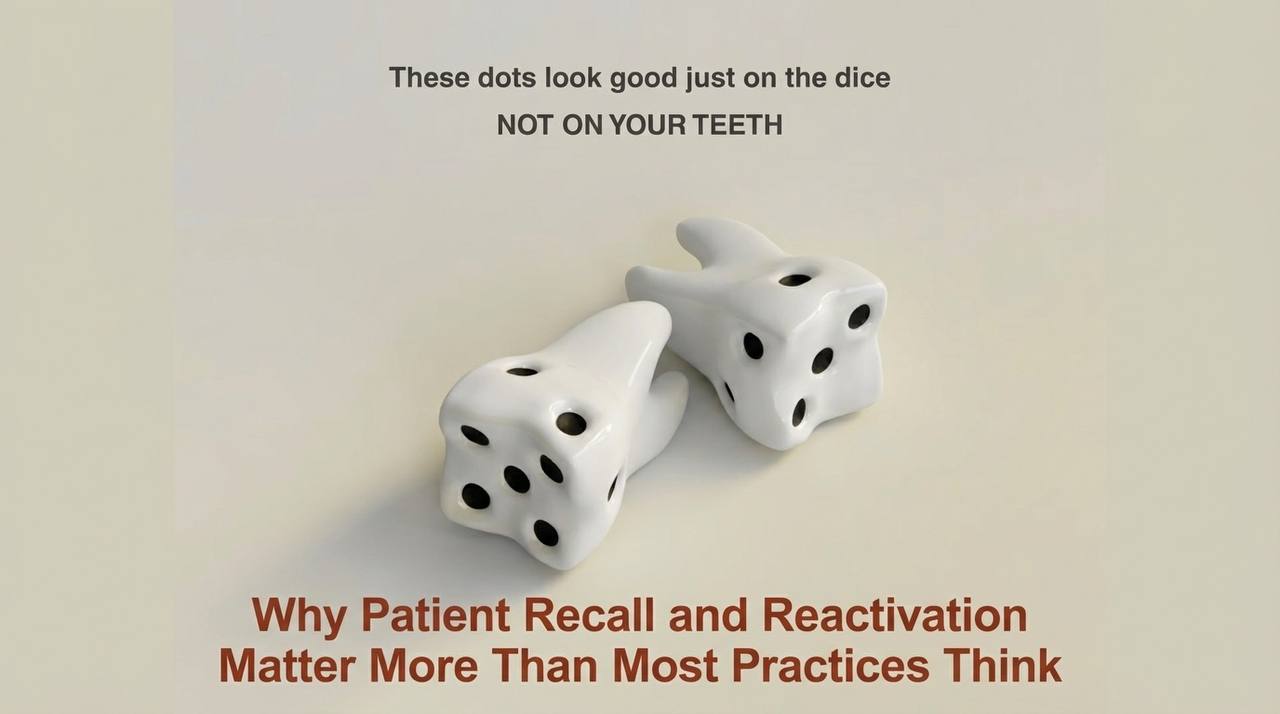
Practices lose far too much value by treating recall as admin instead of growth infrastructure.
That sounds dramatic, but it is true.
A patient who already knows the practice, trusts the clinicians, and has already accepted treatment once is one of the most commercially valuable people in the system. Yet many practices still rely on inconsistent reminders, manual diary checks, or no real reactivation logic at all.
Why This Matters More Than Most Owners Think
When a patient quietly slips away, it often does not feel urgent. There is no complaint. No confrontation. Just a missed recall, a hygiene visit that never gets rebooked, or treatment interest that goes cold.
Multiply that across a practice and the value leakage becomes significant.
That is why recall should not be treated as administration. It is retention. It is revenue protection. It is patient lifetime value management.
The Economics of Follow-Up vs Acquisition
Practices often focus on new patient acquisition because it is more visible. Ads are easy to point at. New enquiries feel like growth.
But lapsed patients are warm demand already sitting inside the system. They are usually cheaper to bring back than new patients are to acquire.
The same is true of patients who asked about treatment but never converted. In many cases, the commercial problem is not awareness. It is follow-up.
Where Practices Usually Leak Value
- routine hygiene recall
- patients who fail to rebook after check-up
- unfinished treatment journeys
- implant or aligner enquiries that go cold
- lapsed patients who simply drift out of habit
None of these are unusual. The issue is whether the practice has a structured way to bring them back.
What to Automate First
1. Hygiene and routine recall
This is the easiest place to start because the logic is predictable and the commercial value is obvious.
2. Post-appointment follow-up
A simple follow-up after a check-up, hygiene appointment, or consultation improves trust and keeps the relationship active.
3. Treatment nurture
Patients considering implants, Invisalign, or cosmetic work often need more time. The practice that follows up properly is more likely to convert the case.
4. Lapsed patient reactivation
Patients who have not been seen in a long time should not sit in the database untouched. A well-timed reactivation sequence can recover meaningful value.
The 30-Day, 60-Day, 90-Day Logic
A useful reactivation system is usually built around timing, not guesswork.
- 30 days: light reminder or post-visit follow-up
- 60 days: stronger rebooking prompt if the patient normally would have returned
- 90 days and beyond: true reactivation with a reason to re-engage
The message should fit the patient type and treatment journey. Not every patient should get the same reminder.
Why This Is Also a Trust Issue
Good follow-up does more than recover revenue. It reinforces that the practice is organised, attentive, and patient-focused.
Poor follow-up creates the opposite impression. It makes the relationship feel transactional and forgettable.
What to Measure
- how many recall messages are sent
- how many hygiene and check-up recalls convert
- how many lapsed patients rebook
- how many high-value treatment enquiries restart after follow-up
- which messages and timings perform best
You do not need an overly complex dashboard to start. You need enough measurement to know what is working and where the gaps are.
The Honest Summary
If a practice is leaking patients quietly, more acquisition only masks the problem. It does not fix it.
Recall and reactivation matter because they protect the value already inside the system. And in a market where trust and patient lifetime value matter so much, that is one of the most commercially important things a practice can get right.
Work With Dental by Foundry
If you want a clearer view of where your recall and follow-up system is helping or hurting growth, we can show you.
Book a free practice growth audit — 30 minutes, no pitch, just a clear diagnosis.